Use the frame type, exit path, and hardware condition to decide what should happen before a pickup. Start with the full item list and the path it must travel. Those two details determine most of the practical planning.
Start with the frame type
Simple metal rails, wood slat frames, upholstered platforms, storage beds, and adjustable bases require different handling. Some separate with common fasteners. Others contain heavy mechanisms, hidden brackets, or powered components. Identify the type before deciding that disassembly is a quick DIY task.
When disassembly usually helps
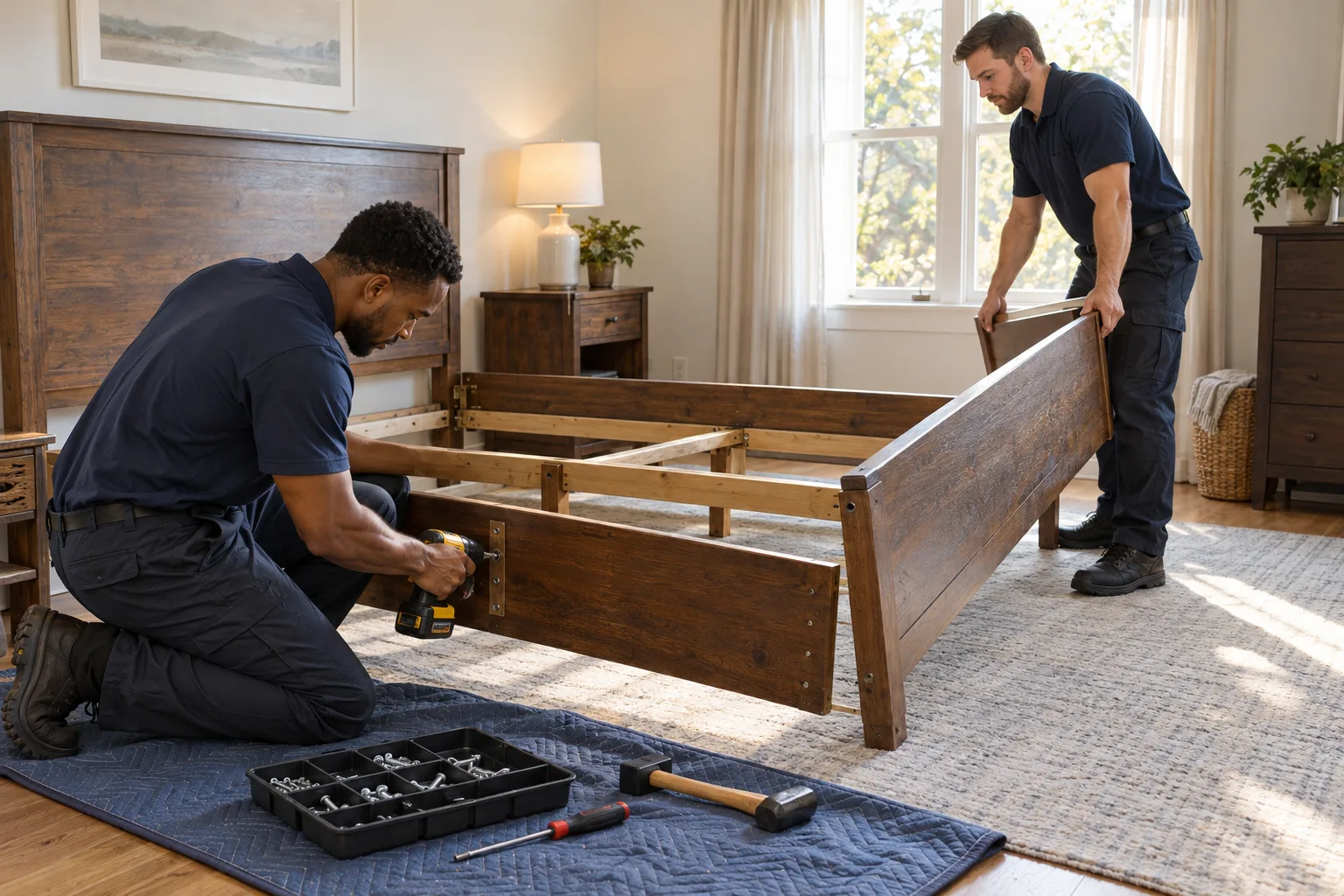
Taking a frame into logical sections can reduce its width, protect doorways, and make pieces easier to control. It is especially useful for large headboards, long side rails, and frames assembled inside a room that has a narrow exit. Keep hardware contained if any piece will be reused.
When to leave it alone
Leave the work to the removal team when fasteners are stripped, the frame shifts under load, electrical or adjustable components are involved, or you cannot support the pieces safely. Do not cut metal or break wood in a finished bedroom to save time. Sharp edges and uncontrolled movement create a larger problem.
Information that changes the plan
Share the material, approximate dimensions, storage drawers, attached headboard, adjustable base, and floor location. Include photos of the assembled frame and the narrowest point on the route. Say whether the mattress and box spring are part of the same pickup.
Prepare the room
Remove bedding, items stored under the bed, lamps, rugs, and loose objects near the work area. Clear access to both sides of the frame. If you start disassembly yourself, stop when a component is heavier or less stable than expected.
For a pickup in Kearney or a listed nearby service area, review the bed removal service, then text photos or call. Availability, final scope, and price should be confirmed before removal begins.
 Call (202) 555-0169